Orthognathic surgery and orthodontics
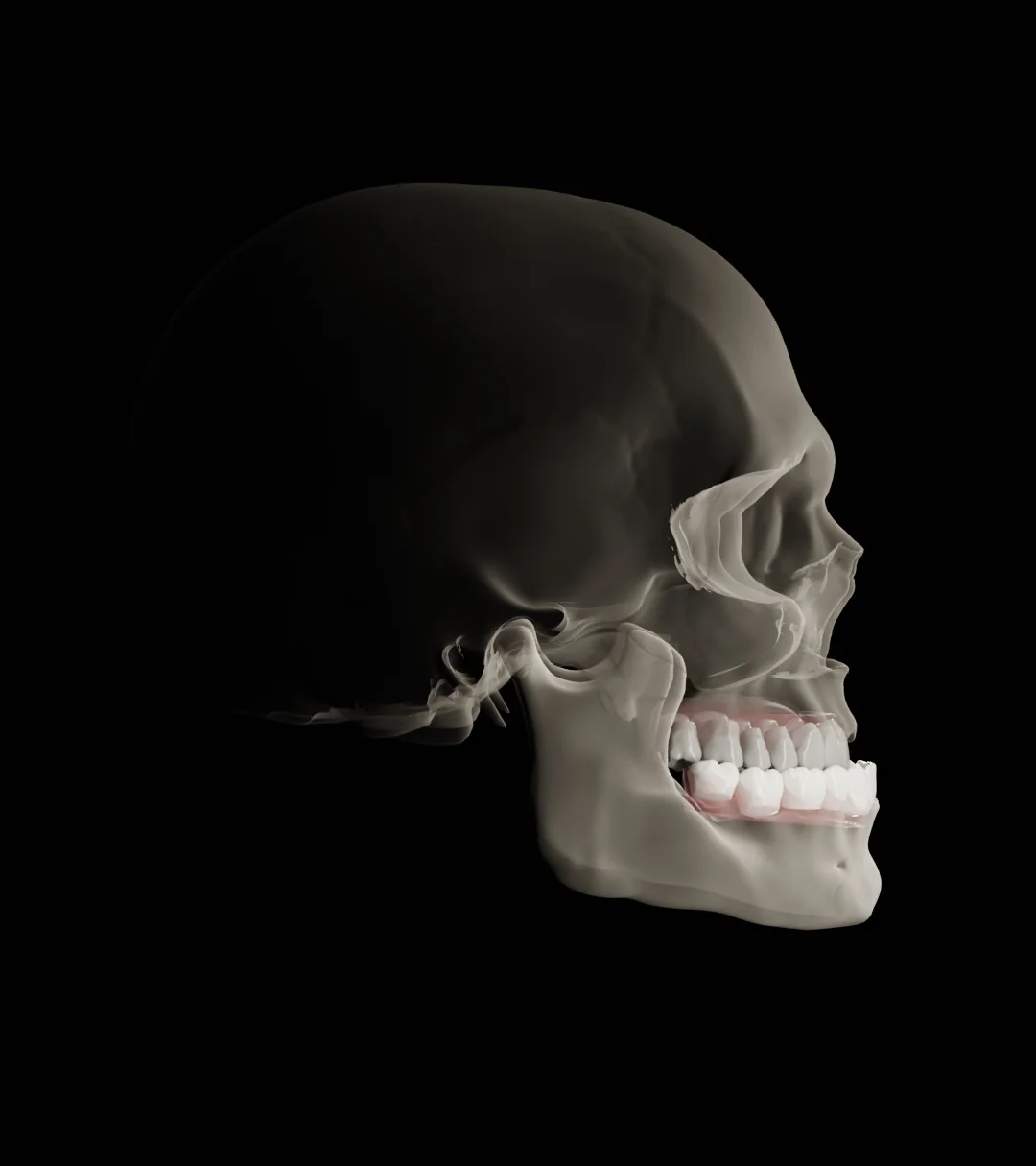
What can point to an underbite?
None of these is a diagnosis on its own, but each is a good reason for an examination.
Reverse bite
The lower front teeth close in front of the upper front teeth.
Concave profile
From the side, the middle of the face looks set back and the chin looks forward.
Difficulty biting
Biting with the front teeth can be difficult, and the back teeth may also cross over.
Family history
A similar jaw shape may be seen in a parent or sibling.
Why after growth has finished?
Orthognathic surgery is done once the jaws have finished growing; a correction made while growth continues can change as growth goes on. Growth usually finishes around 16 to 17 in girls and around 18 in boys; when this has happened is assessed from records.
For treatments that guide jaw growth in children who are still growing:
Jaw orthopaedicsThe orthodontist and the jaw surgeon, together.
Orthodontist
Positions the teeth before and after the operation, and prepares the treatment plan together with the jaw surgeon.
Jaw surgeon
Carries out the operation. A specialist in oral and maxillofacial surgery.
Joint plan
Records, digital planning and the guide splints are the joint work of both doctors and are reviewed together at every stage.
Orthognathic surgery, step by step
Examination and records
The teeth, jaws and face are assessed. A CT scan, photographs and an intraoral scan are taken and, where needed, reviewed together with a jaw surgeon.
Orthodontics before surgery
With braces, or clear aligners where suitable, the teeth are moved into position within each jaw. This usually takes 6 to 18 months.
Digital planning
The jaw movements are planned together with the jaw surgeon, and the guide splints for the operation are made.
Surgery
The operation is carried out by an oral and maxillofacial surgeon under general anaesthesia. The hospital stay and recovery time are discussed with your jaw surgeon.
Orthodontics after surgery
After healing, the bite is fine-tuned. This usually takes 6 to 12 months.
Retention and follow-up
A retainer is used to hold the new position; how and for how long you wear it is set for you.
After the operation
Swelling
Swelling and tenderness in the face are expected in the first days and ease over time. The hospital stay and recovery time are discussed with your jaw surgeon.
Eating
For a while you eat soft and mostly liquid food; your surgeon decides when you can return to a normal diet.
Oral hygiene
Keep your mouth clean as your surgeon advises, taking extra care around braces or aligners.
Check-ups
After the operation, regular check-ups continue with both the jaw surgeon and the orthodontist.
Frequently Asked Questions
Does every jaw difference need surgery?
No. Some differences can be balanced with orthodontics alone. Which approach suits you is decided through an examination and records.
At what age is it done?
Once growth has finished, usually around 16 to 17 in girls and around 18 in boys. Whether growth has finished is assessed from records.
How long does treatment take?
Orthodontics before surgery usually takes 6 to 18 months, and after surgery usually 6 to 12 months. It varies from person to person; the expected time for you is discussed after the examination.
Can it be done with clear aligners?
In suitable cases, yes. Orthodontics before and after surgery can be done with braces or clear aligners; which suits you is decided at the examination.
Will there be scars on the face?
In these operations the incisions are usually made inside the mouth. Your jaw surgeon will explain the approach for you.
Will it hurt after the operation?
Swelling and tenderness are expected in the first days. Your jaw surgeon provides the medicines and advice you need for this period.
The plan starts with an examination.
Fill in the form and we will call you to agree on a day and time for an examination.
This page is for information only. Diagnosis and treatment decisions are made at an examination.
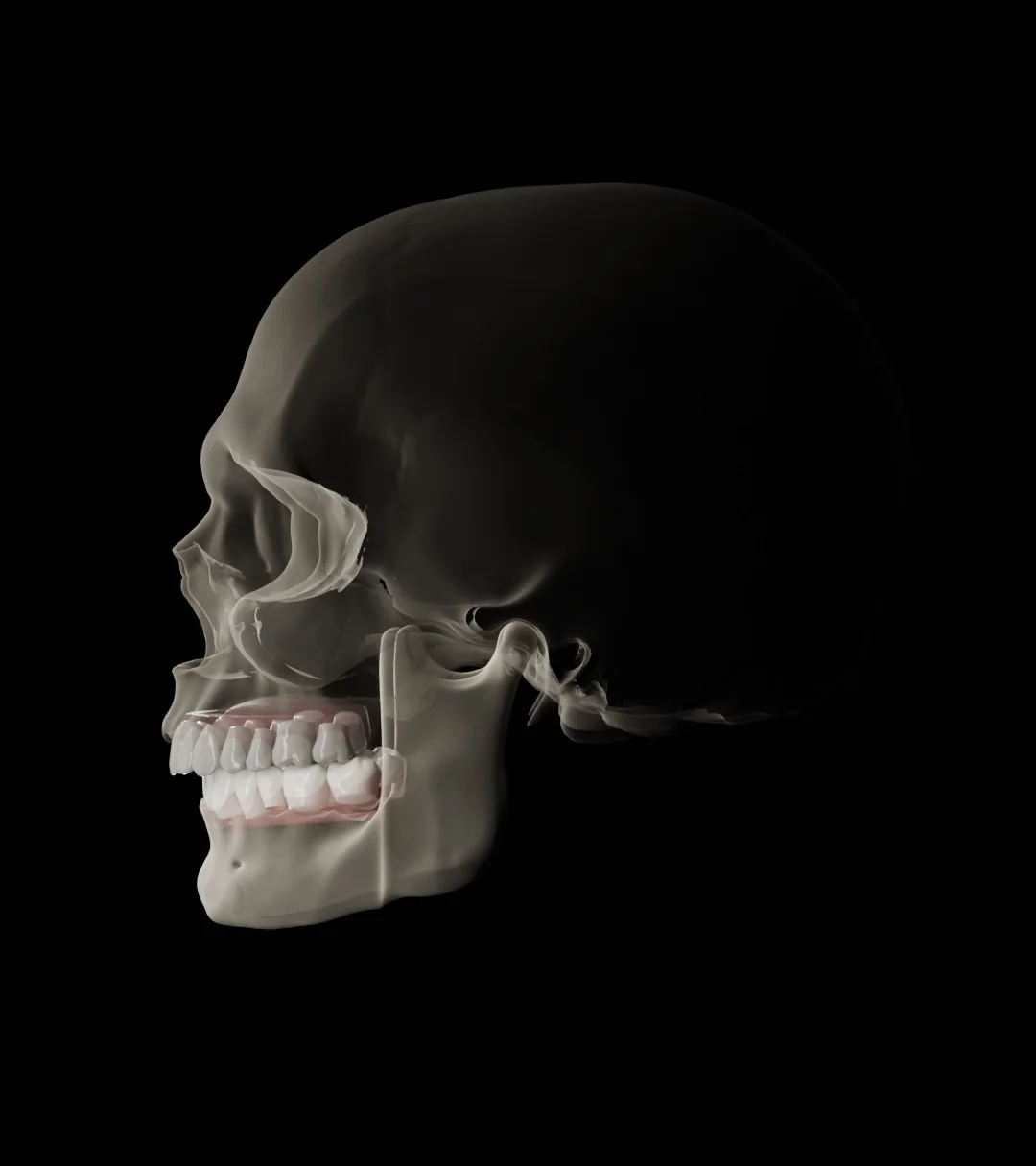
What can point to an overbite?
None of these is a diagnosis on its own, but each is a good reason for an examination.
Upper teeth far forward
The upper front teeth sit well ahead of the lower ones, with a clear gap between the two rows.
Convex profile
From the side the chin looks set back.
Deep bite
The upper front teeth cover most of the lower ones, and the lower front teeth may touch the palate.
Lips
The lips may not close easily at rest, and the lower lip may tuck behind the upper front teeth.
Why after growth has finished?
Orthognathic surgery is done once the jaws have finished growing; a correction made while growth continues can change as growth goes on. Growth usually finishes around 16 to 17 in girls and around 18 in boys; when this has happened is assessed from records.
For treatments that guide jaw growth in children who are still growing:
Jaw orthopaedicsThe orthodontist and the jaw surgeon, together.
Orthodontist
Positions the teeth before and after the operation, and prepares the treatment plan together with the jaw surgeon.
Jaw surgeon
Carries out the operation. A specialist in oral and maxillofacial surgery.
Joint plan
Records, digital planning and the guide splints are the joint work of both doctors and are reviewed together at every stage.
Orthognathic surgery, step by step
Examination and records
The teeth, jaws and face are assessed. A CT scan, photographs and an intraoral scan are taken and, where needed, reviewed together with a jaw surgeon.
Orthodontics before surgery
With braces, or clear aligners where suitable, the teeth are moved into position within each jaw. This usually takes 6 to 18 months.
Digital planning
The jaw movements are planned together with the jaw surgeon, and the guide splints for the operation are made.
Surgery
The operation is carried out by an oral and maxillofacial surgeon under general anaesthesia. The hospital stay and recovery time are discussed with your jaw surgeon.
Orthodontics after surgery
After healing, the bite is fine-tuned. This usually takes 6 to 12 months.
Retention and follow-up
A retainer is used to hold the new position; how and for how long you wear it is set for you.
After the operation
Swelling
Swelling and tenderness in the face are expected in the first days and ease over time. The hospital stay and recovery time are discussed with your jaw surgeon.
Eating
For a while you eat soft and mostly liquid food; your surgeon decides when you can return to a normal diet.
Oral hygiene
Keep your mouth clean as your surgeon advises, taking extra care around braces or aligners.
Check-ups
After the operation, regular check-ups continue with both the jaw surgeon and the orthodontist.
Frequently Asked Questions
Does every jaw difference need surgery?
No. Some differences can be balanced with orthodontics alone. Which approach suits you is decided through an examination and records.
At what age is it done?
Once growth has finished, usually around 16 to 17 in girls and around 18 in boys. Whether growth has finished is assessed from records.
How long does treatment take?
Orthodontics before surgery usually takes 6 to 18 months, and after surgery usually 6 to 12 months. It varies from person to person; the expected time for you is discussed after the examination.
Can it be done with clear aligners?
In suitable cases, yes. Orthodontics before and after surgery can be done with braces or clear aligners; which suits you is decided at the examination.
Will there be scars on the face?
In these operations the incisions are usually made inside the mouth. Your jaw surgeon will explain the approach for you.
Will it hurt after the operation?
Swelling and tenderness are expected in the first days. Your jaw surgeon provides the medicines and advice you need for this period.
The plan starts with an examination.
Fill in the form and we will call you to agree on a day and time for an examination.
This page is for information only. Diagnosis and treatment decisions are made at an examination.