Braces · Istanbul
Small parts.A plan to the millimetre.
In braces treatment, the position of every bracket is planned before you start. Scroll down and follow it step by step.
- Every tooth has its own bracket. Each bracket’s position is set by the shape of the tooth and your digital plan.
- The brackets are bonded to the teeth. Each bracket is placed, one by one, on the front surface of its tooth. This is usually done in a single visit.
- The wire guides the teeth. The wire runs through the brackets and is held in place with small elastics. At check-ups, the wire and adjustments change in the planned order.
- A less visible option. Treatment can also be done with tooth-coloured porcelain brackets, a white-coated wire and clear elastics. Use the switch to watch the scene in porcelain.
- Your plan starts with an examination. The right method for you is decided together, through examination and digital planning.
When are braces used?
None of these is a diagnosis on its own, but each is a good reason for an examination.
Crowding
There is not enough room, so teeth overlap or sit out of line.
Gaps between teeth
There are gaps between the teeth that show when you smile.
Bite problems
The upper and lower teeth do not meet properly: a deep bite, open bite or crossbite.
Rotated and tilted teeth
Teeth are rotated or tilted.
Metal or porcelain?
Treatment works the same way with both; the difference is in appearance and a few care details. We decide together which suits you.
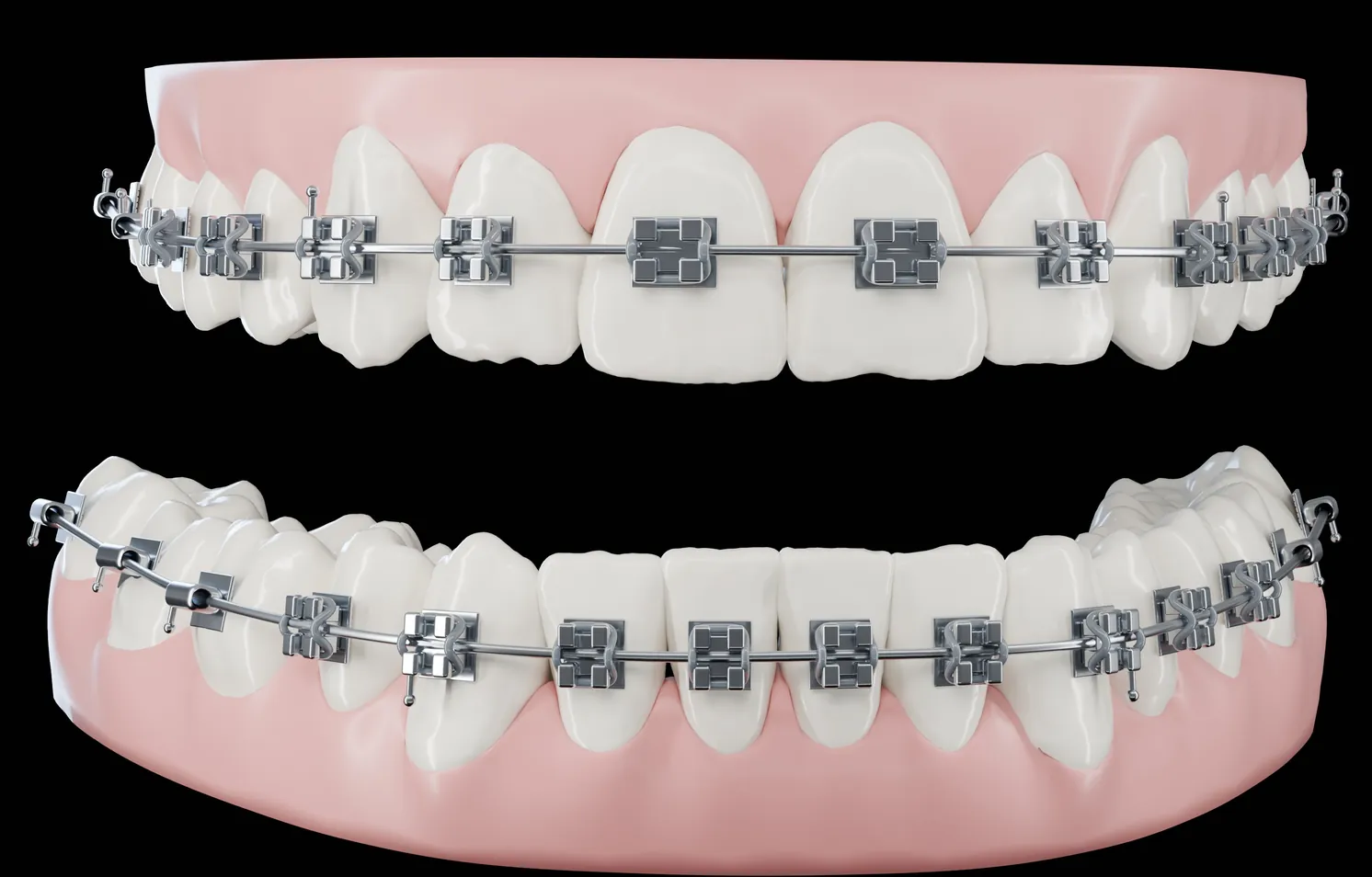
Metal brackets
Small stainless-steel brackets, a long-established method. The elastics can be grey or clear.
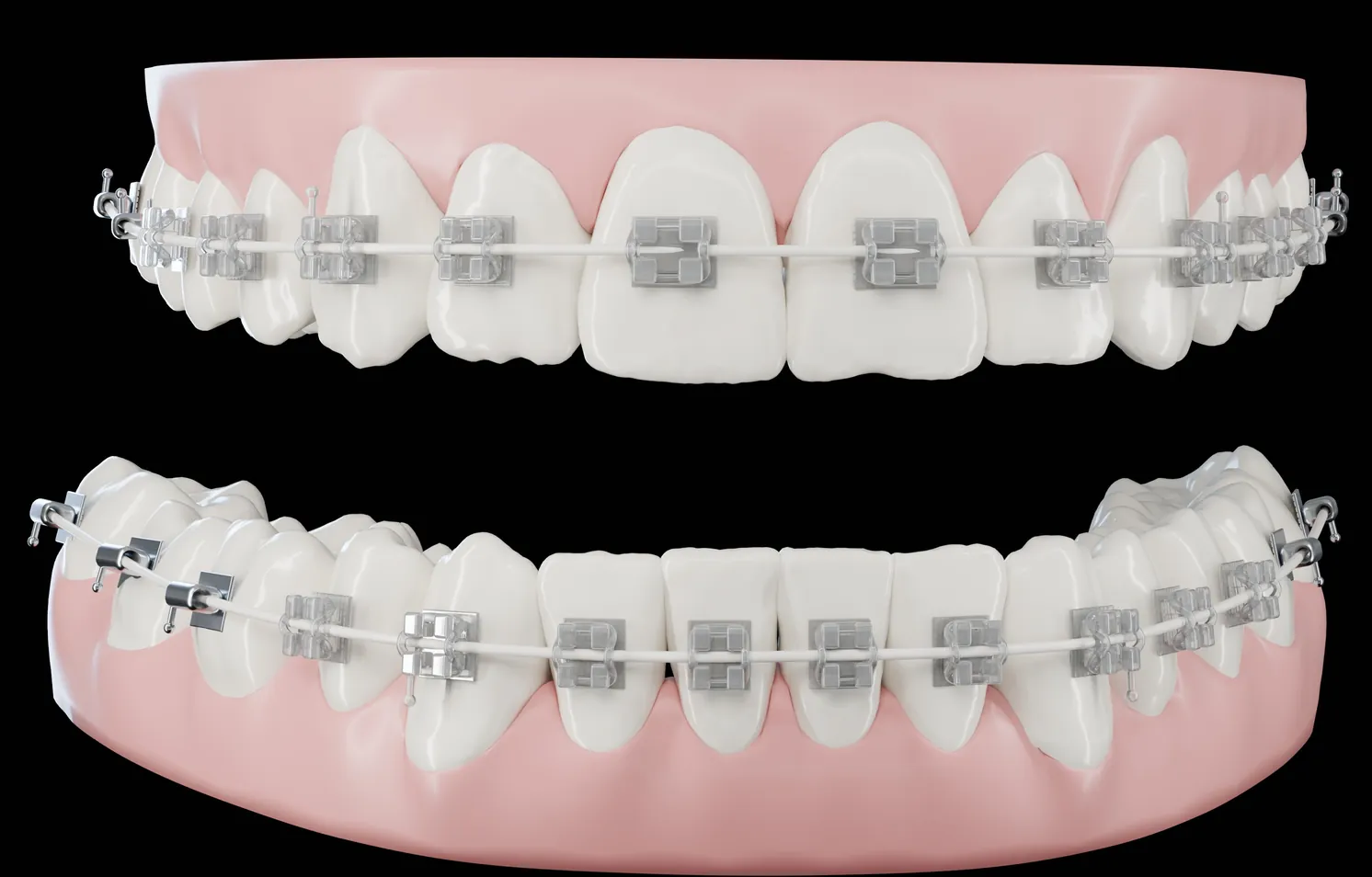
Porcelain brackets
Tooth-coloured brackets that draw less attention, used with a white-coated wire and clear elastics. The elastics can pick up colour from coffee, tea and similar foods over time; they are replaced at check-ups.
Braces or clear aligners?
Both methods move the teeth to their planned position. Which one suits you is decided together at the examination, based on your teeth, your expectations and your daily routine.
See clear aligner treatmentBraces, step by step
Examination and records
Your teeth, jaws and face are assessed, with X-rays if needed. An intraoral scanner creates a 3D model of your teeth.
Digital plan
Each movement of your teeth is planned step by step and reviewed together on screen.
Bonding the brackets
The brackets are bonded to the teeth and the first wire is fitted, usually in a single visit.
Regular check-ups
Usually every 4–6 weeks; the wire and adjustments are changed in the planned order.
Removing the brackets
When the teeth reach their planned position, the brackets are removed and the teeth are cleaned and polished.
Retention
A retainer is used to hold the teeth in their new position. How and for how long you wear it is decided for you.
Everyday life with braces
Brushing
Brush after every meal and clean around the brackets and wire with an interdental brush.
Food
Hard and sticky foods can loosen brackets, such as nuts in their shells, hard sweets and chewing gum. Cut hard fruit and vegetables like apples and carrots into small pieces.
Sport
Wear a mouthguard for contact sports.
The first days
For a few days after the brackets are fitted or the wire is changed, your teeth may feel pressure and tenderness; this usually passes quickly. If a bracket rubs your cheek or lip, orthodontic wax can help.
Frequently Asked Questions
Do braces hurt?
Bonding the brackets is painless. For a few days after fitting and after wire changes you may feel pressure and tenderness; this usually eases quickly.
How long does treatment take?
It depends on your teeth. After the examination and planning, an expected duration is set for you.
Will braces affect my speech?
Because the brackets sit on the front of the teeth, speech is usually not affected. Your lips may need a few days to get used to them.
Can adults have braces?
Yes. If the teeth and gums are healthy, orthodontic treatment can be done at any age; suitability is decided at an examination.
What if a bracket comes loose?
Call the clinic. We will decide together whether it needs to be re-bonded before your next check-up.
Will my teeth move back after treatment?
Teeth tend to shift over time. Wearing your retainer as advised helps keep them in their new position.
Let’s see together whether it suits you.
Fill in the form and we will call you to agree on a day and time for an examination.
This page is for information only. Diagnosis and treatment decisions are made at an examination.